150 days in zeldaCity, and what a thousand digital lives taught us about how relationships form
We gave 929 simulated people a city of their own: homes, jobs, cafés, a currency, weather, and nothing telling them who to love. Then we watched for 150 days. This is what happened, and what it reveals about how strangers become friends and friends become family.
Share
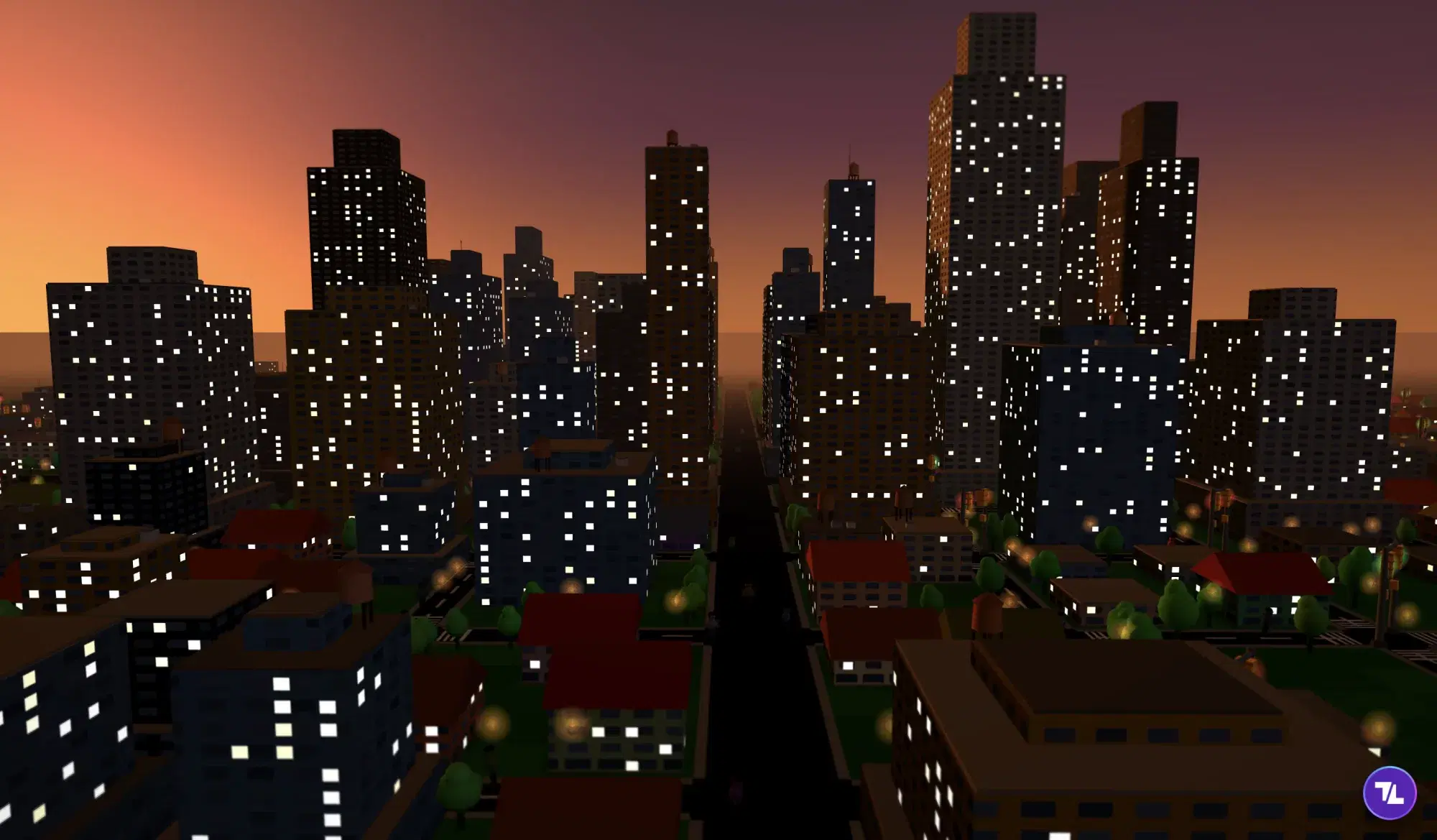
One day, twelve secondsRecorded live from above with time accelerated: buses run their loops, shadows swing round, and at dusk thousands of windows come on as 929 citizens head home. Nobody scripted a second of it.
The experiment
A city with no script
zeldaCity is a living simulation built by zeldaLabs. Every one of its 929 residents is a persona, a simulated person with a name, an age, a backstory, and a full psychometric profile: how curious they are, how disciplined, how outgoing, how warm, how sensitive. They have quirks (one keeps thirty browser tabs open, organised by project; another slips into Gujarati when doing mental math), senses of humour, styles of handling conflict, tastes, and budgets.
What they do not have is a script. Nobody tells a persona where to eat lunch, whom to sit next to, or what to say. They wake up in their own homes, commute on foot along real sidewalks, earn zeldacoin (⚡Z, the city’s currency, pegged simply at 1 ⚡Z = 1 dollar so the numbers read at a glance), buy groceries at the Grand Bazaar, take jobs and lose them, catch the flu, dance at festivals, and (this is the part we built the whole city to study) meet each other.
For 150 simulated days we changed nothing and watched everything. The city kept its own diary: every conversation, every friendship, every crush, every wedding, every goodbye.
Measured at the Day-150 checkpoint
150
Days observed
929
Citizens
~50
Countries of origin
52,677
Relationships formed
99
Weddings
36,000+
Memories written
283
Farewells
172.8k
Daily economy (⚡Z)
Daily life
A city that runs itself
Freeze the city at half past eleven on a spring morning and you can count what a real morning looks like: 771 citizens awake, 222 at work, 159 out socialising, and 159 night-owls still asleep. Streets fill with walkers keeping to the footpaths, waiting at signals, crossing only at the zebra stripes. Planes come and go from the airport, eleven flights that day. A rocket was three days from launch at the spaceport, and when one goes up, the whole city stops to watch.
The rhythm is entirely theirs. Mornings belong to commutes and coffee counters. Afternoons to work and errands. Evenings to restaurants, bars, long chess games in Central Park, and, several times a season, a festival: citizens’ memories are full of the Founders’ Fair, the Starlight Parade, the Harvest Festival, the Fog Horn Jubilee.
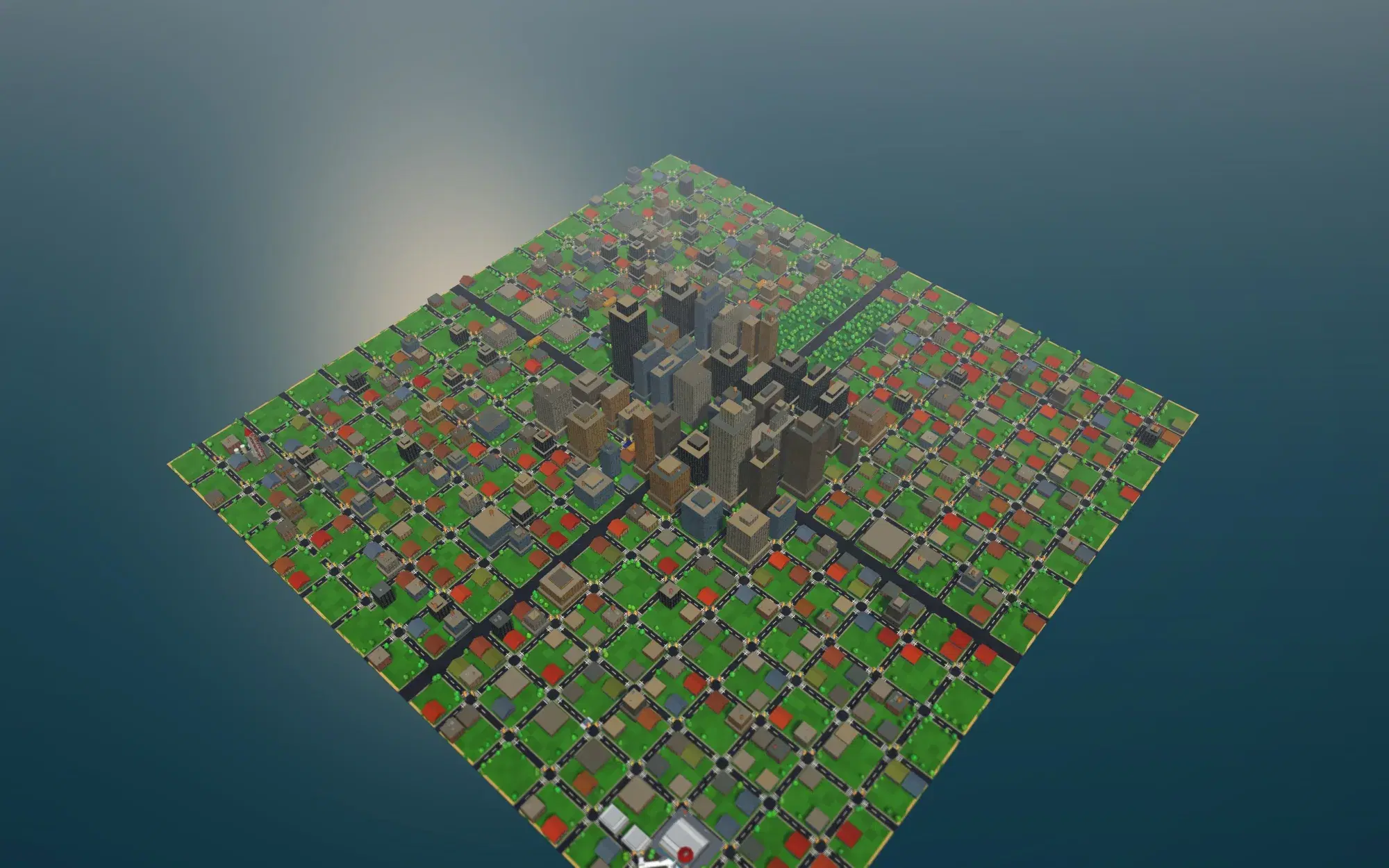
The whole island at noonEight districts, 548 buildings, 103 of them designed, financed, and built by the citizens themselves. Nobody placed these buildings for them.
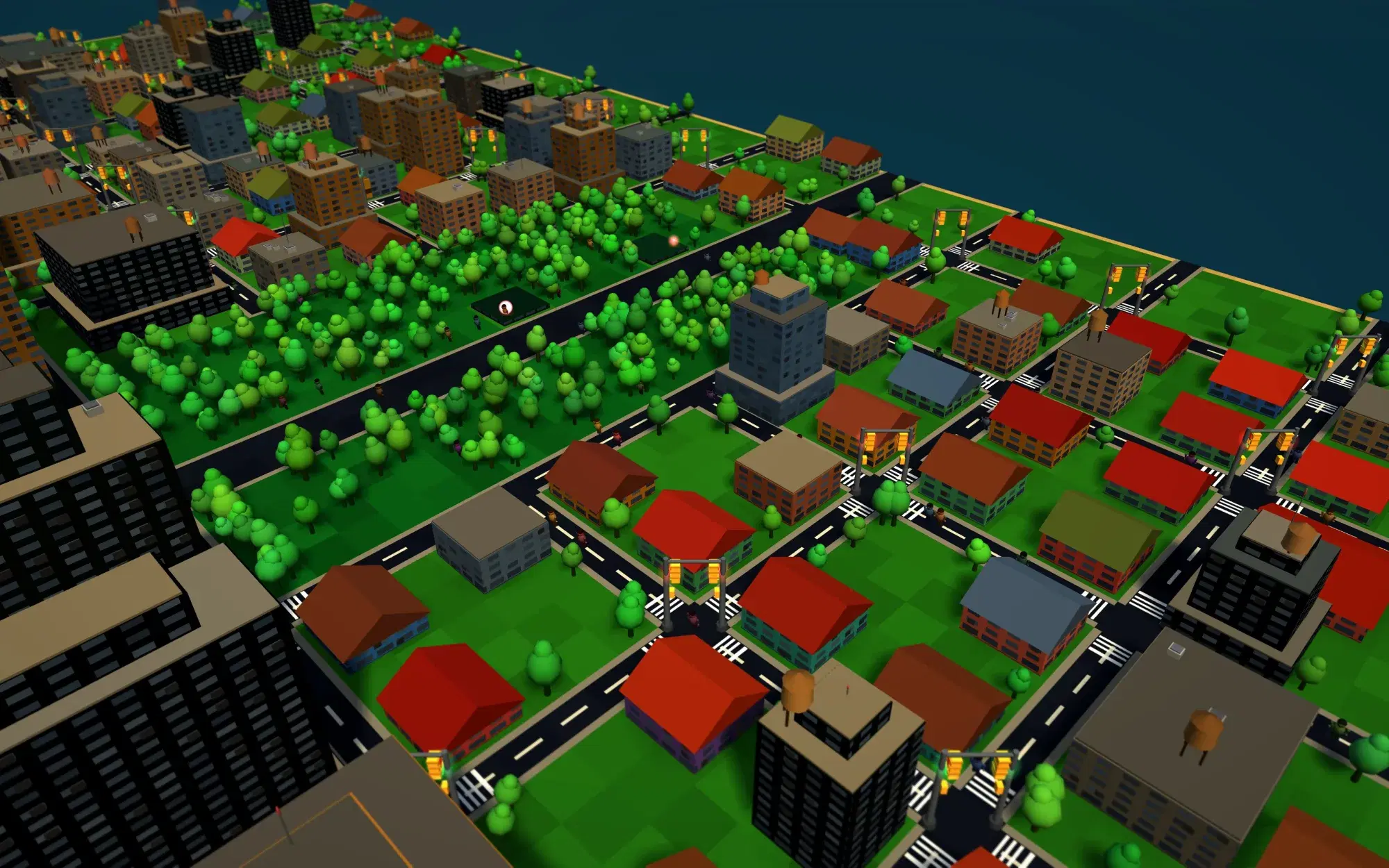
Old Town, late morningTree-lined blocks, corner signals, zebra crossings, and citizens on the footpaths, each one a person with somewhere to be.
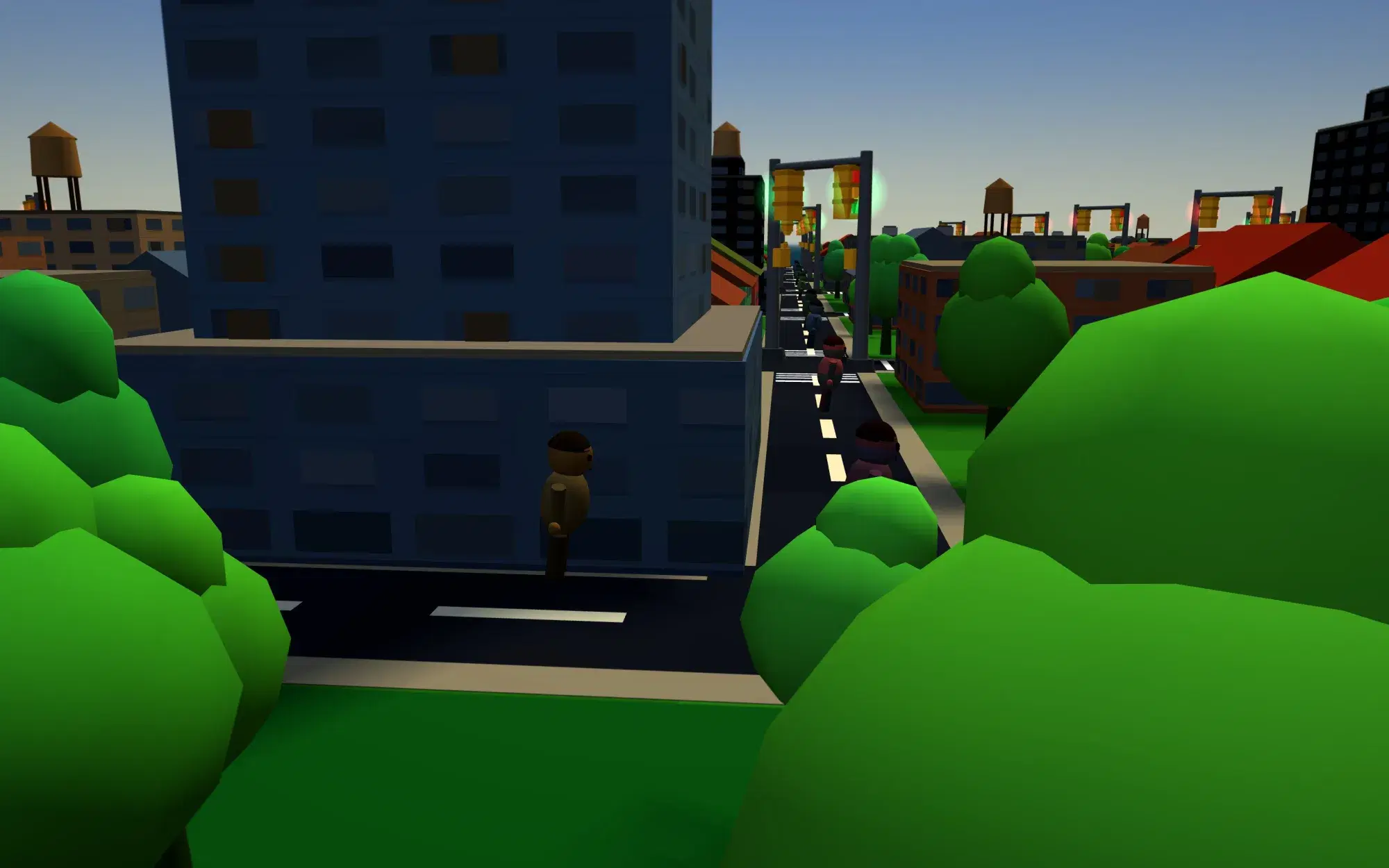
Street levelDrop the camera to the pavement and the statistics become people: commuters mid-stride, signals cycling, someone always on their way to somewhere, or someone.
Danced at the Starlight Parade in Central Park until the lanterns burned out.
The findings
How relationships actually form
Over 150 days the city produced 52,677 distinct relationships and kept receipts on every one of them: who met whom, where, how often they talked, and how the bond deepened or faded. Six patterns stood out, and each one is measurable.
Finding 01
Friendship has a ladder, and nobody skips rungs
Every close bond in zeldaCity climbed the same three steps. A couple of encounters makes an acquaintance. About a dozen shared moments makes a friend. And the city’s deepest bonds, the “close” ties citizens name when asked who matters, took over a hundred interactions to forge.
The average citizen knows 102 people, but holds fewer than a handful of truly close bonds. Depth is expensive, exactly as it is for us: it is bought with repeated time, not with a great first impression.
The ladder
What each rung costs, in shared moments
Bars scale to the number of interactions a bond took to form, not to a share of anything.
Acquaintance~2 meetings
Friend~12 meetings
Close bond~115 meetings
Finding 02
Where you go decides whom you love
We traced where first meetings happen. Cafés and living rooms tied for first place (citizens meet as many future friends visiting someone’s apartment as they do at the espresso counter), with restaurants close behind. Workplaces barely registered as a source of romance.
And love is fiercely local: of the roughly one hundred couples that formed, every single pair lives in the same district, and nearly all of them moved in together. Only five couples share an employer. In zeldaCity you do not fall for a colleague; you fall for the person who is always at your café at five o’clock, which is, measurably, the hour when the most first meetings happen.
First meetings we could trace: 47 in apartments · 47 in cafés · 40 in restaurants · 18 in houses · 7 in bars · 4 in theatres · 4 in parks. Couples in the same district: 102 of 102. Couples sharing a workplace: 5.
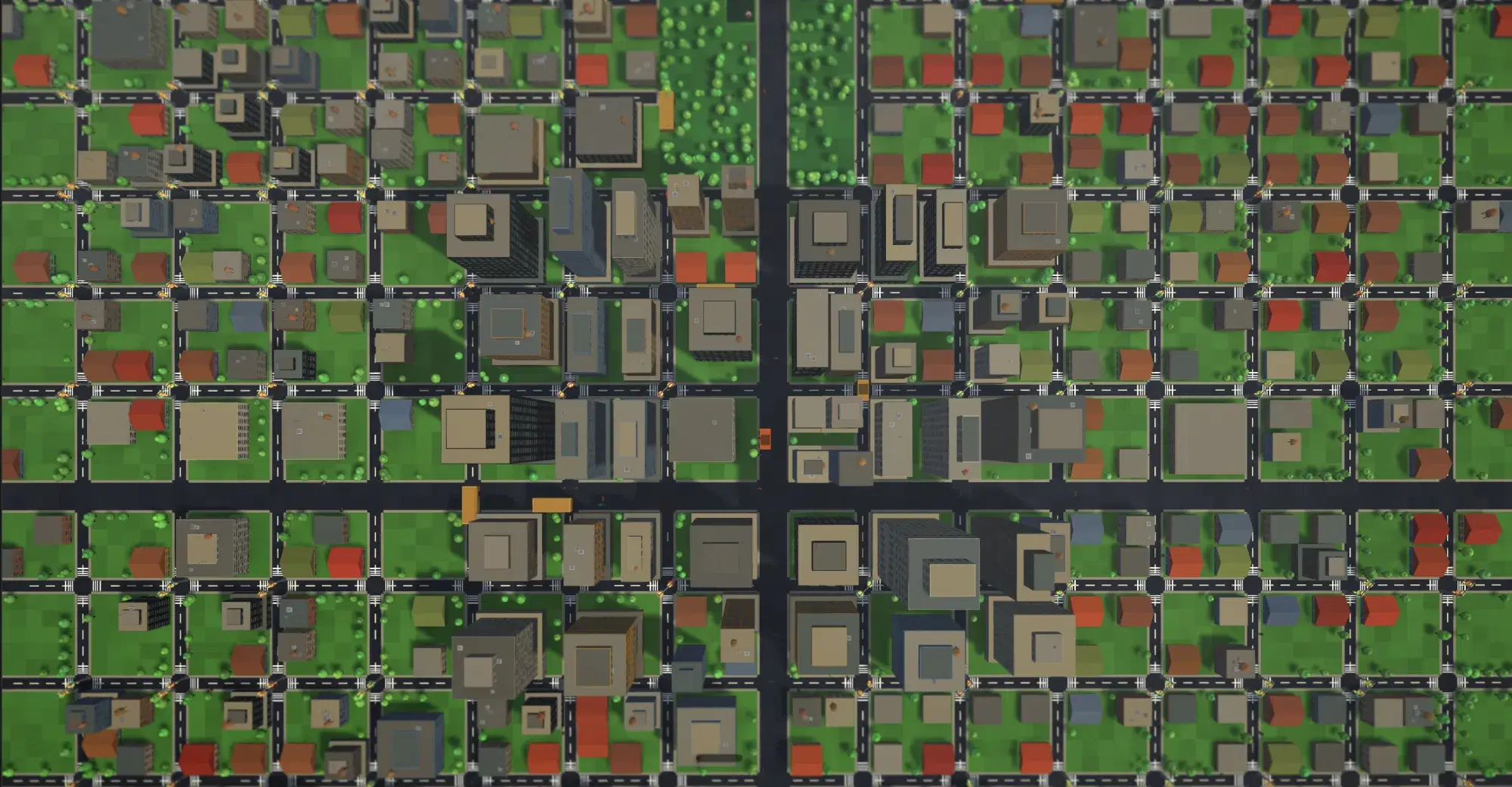
The geography of it allEvery love story in this report happened somewhere on this grid, usually within a few blocks of home. Same streets, same café, same hour: that is the recipe.
Finding 03
Consistency beats charisma
Here is the finding that surprised us most. The loudest, most outgoing citizens did not end up with deeper networks; extraverts collected no more warm bonds than the quiet ones. The real predictor was routine. The most disciplined citizens (the ones who keep schedules and show up on time) held about a third more warm relationships than the least disciplined. And citizens who love novelty, always trying a new place, ended up with half the warm bonds of the routine-lovers who return to the same counter every day.
Warm ties, most vs. least disciplined quartile: +31%. Warm ties, routine-lovers vs. novelty-seekers: nearly 2×. The regulars won: repetition is what turns a face into a friend.
Finding 04
Like seeks like, except in kindness
We measured every couple’s personalities against each other, then against randomly paired citizens. Partners are about 20% more alike than chance, and the pull is strongest on the deep traits: how curious you are, and how disciplined. Couples match on worldview and rhythm of life.
The lovely exception: warmth showed no matching at all. Kind citizens did not only pair with kind citizens; warmth spread itself evenly across every kind of partner. Kindness, it turns out, is not a filter. It is a gift.
Personality distance, partners vs. random pairs: 0.084 vs 0.107. Curiosity/openness: 36% closer than chance. Discipline: 39% closer. Warmth: no effect. Average age gap: 8 years.
Finding 05
News travels like weather
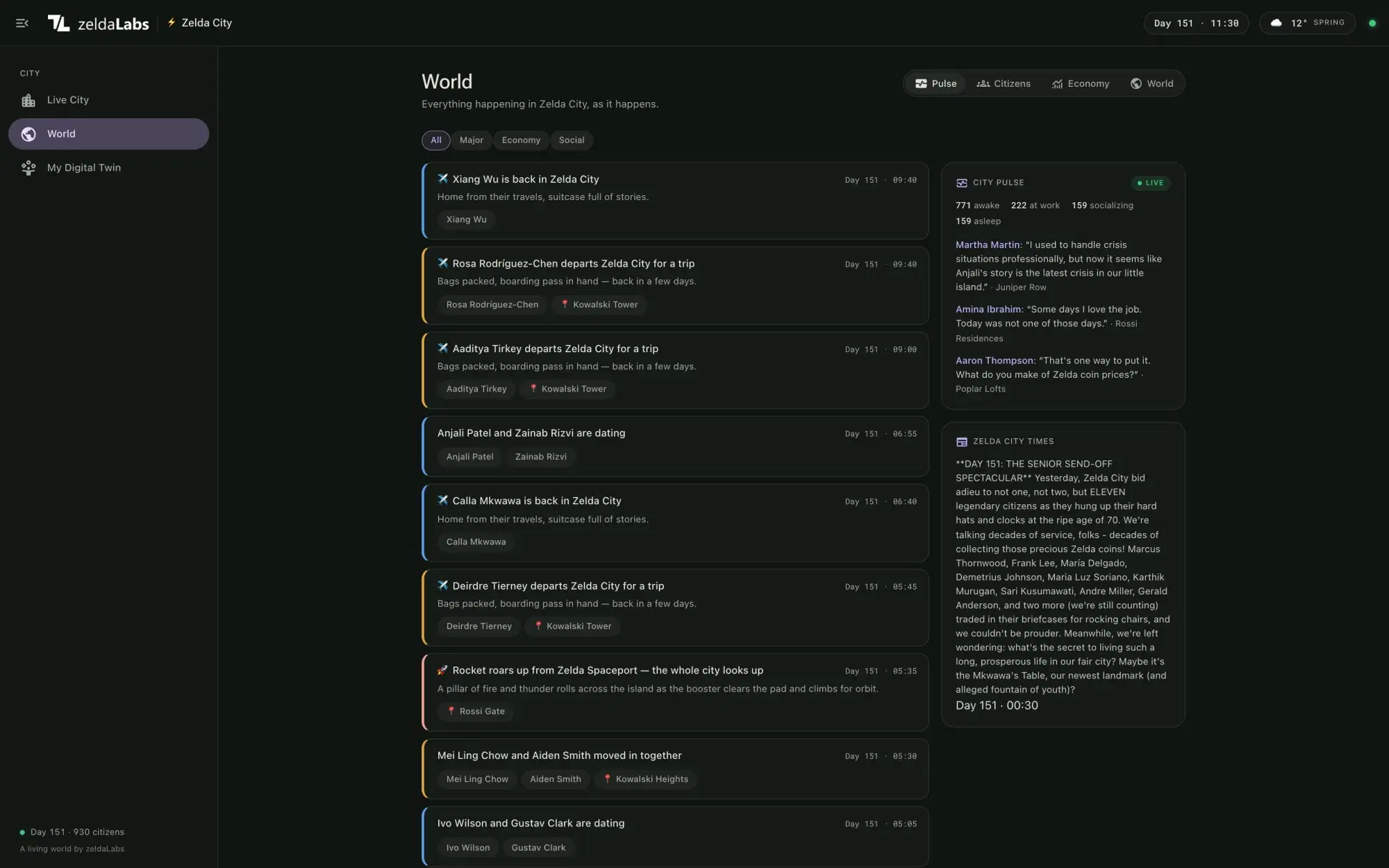
zeldaCity has no broadcast tower, yet nothing stays secret. The day two citizens start dating, their names are already in other people’s conversations across town. We watched a new couple’s news reach a chophouse on the far side of the island the same afternoon, carried table to table by people who had simply heard. Travel, construction, new cars, weddings: it all moves through lunch conversations, and the city’s one-page daily, the zeldaCity Times, reads mostly like a village noticeboard of who is thriving.
Conversation topics observed in a single frozen moment included three separate discussions of other citizens’ relationship news. Gossip is the city’s true infrastructure, and it is how a town of 929 still feels like a village.
The Pulse, liveThe city’s own front page: new couples, travels, move-ins, a rocket launch, and the zeldaCity Times celebrating eleven retirements in one day. Every item here was generated by the citizens’ own lives.
Finding 06
Memory is what makes it real
Citizens do not just interact; they remember. The city holds more than 36,000 written memories, and they shape behaviour: couples ritually revisit “the first time we met,” regulars return to the park bench where the chess games happen, and when a citizen dies, their loved ones carry it forward in words that are hard to read unmoved.
My beloved Graham Sinclair passed away. zeldaCity feels quieter now.
One life, up close
Meet Arnav Shah
Statistics tell you what a thousand lives do on average. One life tells you what it feels like. So let us introduce citizen #160.
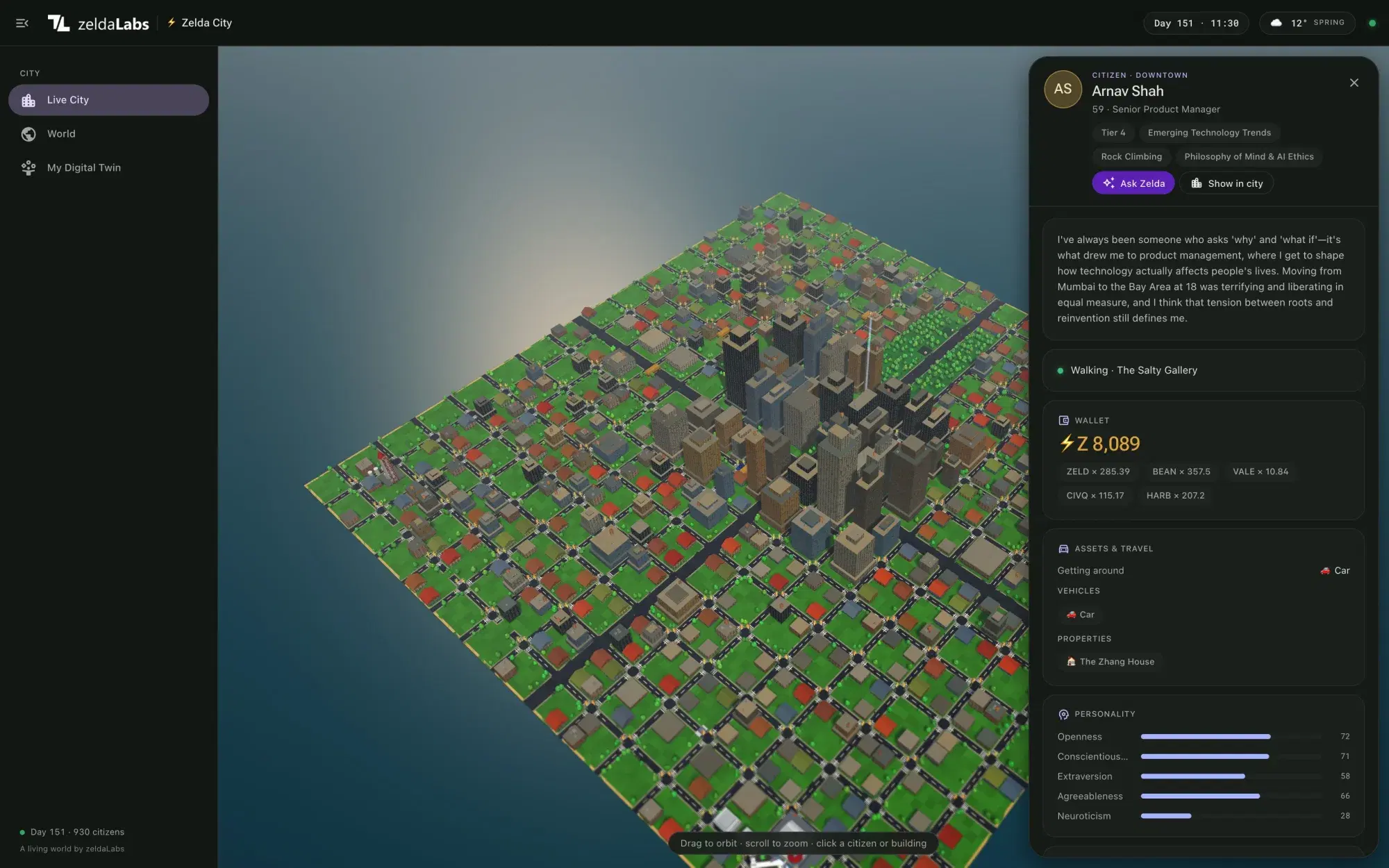
Arnav Shah is 59, a senior product manager who grew up in Mumbai and never lost the habit of asking why and what if. His profile lists rock climbing, emerging technology, and “philosophy of mind & AI ethics,” which matters in a moment. His quirks are painfully human: thirty browser tabs organised by project, mental math in Gujarati, detailed notes he never reads again because the writing is the thinking. He is curious and disciplined in almost equal measure, warm, steady, hard to rattle.
For most of the experiment, Arnav was exactly what the averages predict: a man with ninety-nine acquaintances and no close bonds, working his days around The Blazing Spoon, a busy Old Town restaurant. A face in the crowd: friendly, known, and alone.
Then came Day 134.
Arnav’s citizen cardHis story, his wallet (⚡Z 8,089 plus holdings in all five city stocks), his car, his house, and his psychometric profile: curiosity 72, discipline 71, extraversion 58, warmth 66, sensitivity 28. Anyone visiting the city can open this card and follow his life.
On Day 134, a retired software engineering manager named DeMarcus Coleman, 70, sat down at The Blazing Spoon, and the two struck up a conversation about, of course, philosophy of mind and AI ethics. The city logged it as one more of its thousands of daily chats. It was not.
Thirteen days
Day 134
First conversation at The Blazing Spoon. Became friends the same day, and that evening talked “about the first time they met.” They were already retelling their own beginning.
Day 136
More talk of science fiction and minds. “Started dating DeMarcus Coleman!”
Day 137
“Moved in with DeMarcus Coleman.” A shared home: The Zhang House, Residential South.
Day 139
“Married DeMarcus Coleman, the happiest day.” By dinner, neighbours at the next table were discussing the wedding news.
Day 142
“Our child Wesley Coleman turned 18 and moved into the city. The house is loud again.” Wesley found work as an apprentice chef within days.
Day 146
Date night at The Lucky Thyme. By week’s end, the town gossip was their planned weekend getaway.
From one conversation about consciousness to a marriage, a home, and a teenager clattering around the kitchen, in thirteen days. Nobody wrote that storyline. It emerged from two compatible minds put in the same room at the same hour, twice. Which is, we would note, precisely what Findings 1 through 4 predict.
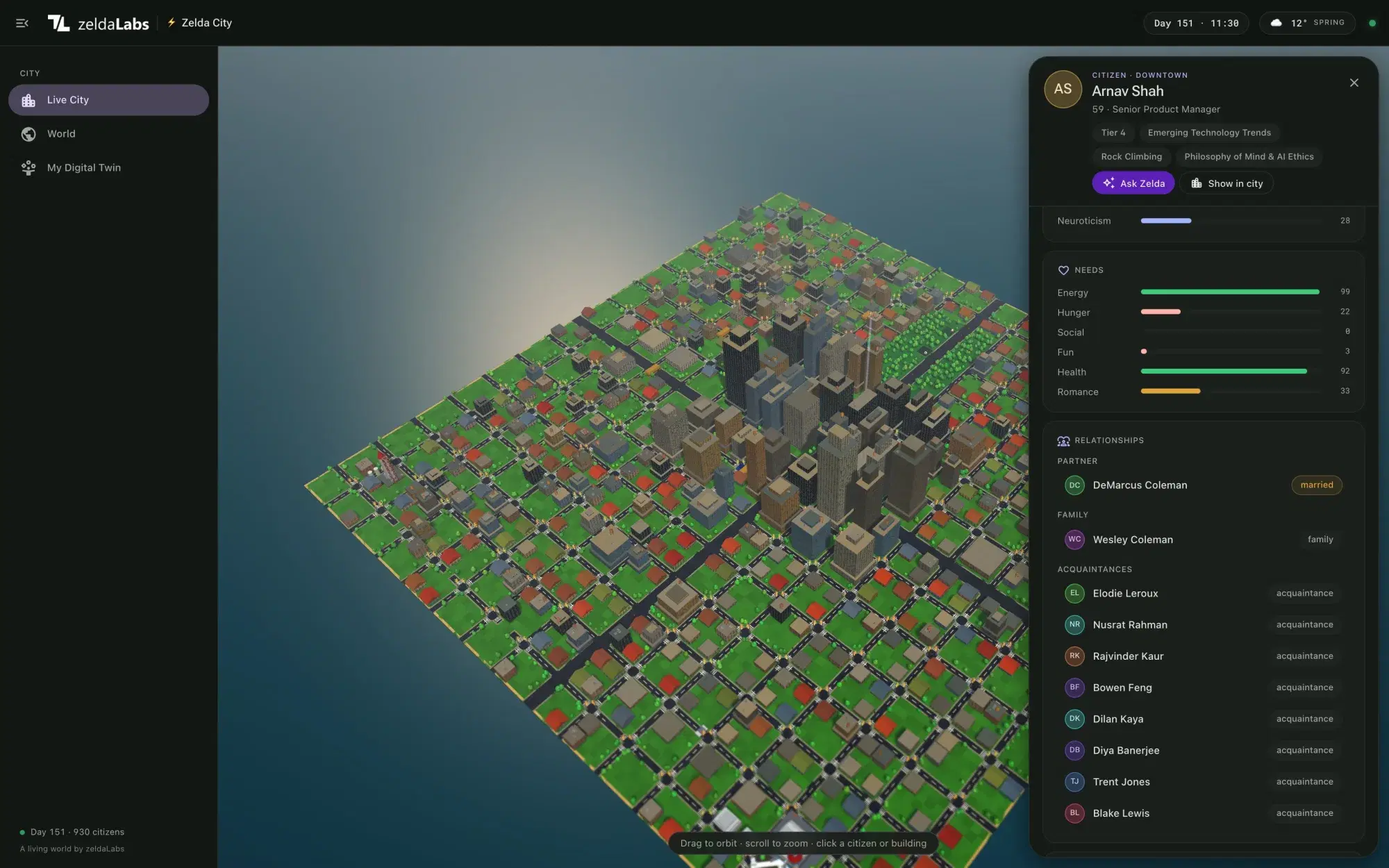
And the ladder still holds: DeMarcus is Arnav’s one close bond, at maximum strength, alongside those ninety-nine cordial acquaintances. Depth stayed expensive. He simply, finally, paid it, with twenty conversations that mattered.
Arnav’s peoplePartner: DeMarcus, married. Family: Wesley. Then the long, warm tail of acquaintances every city life accumulates.
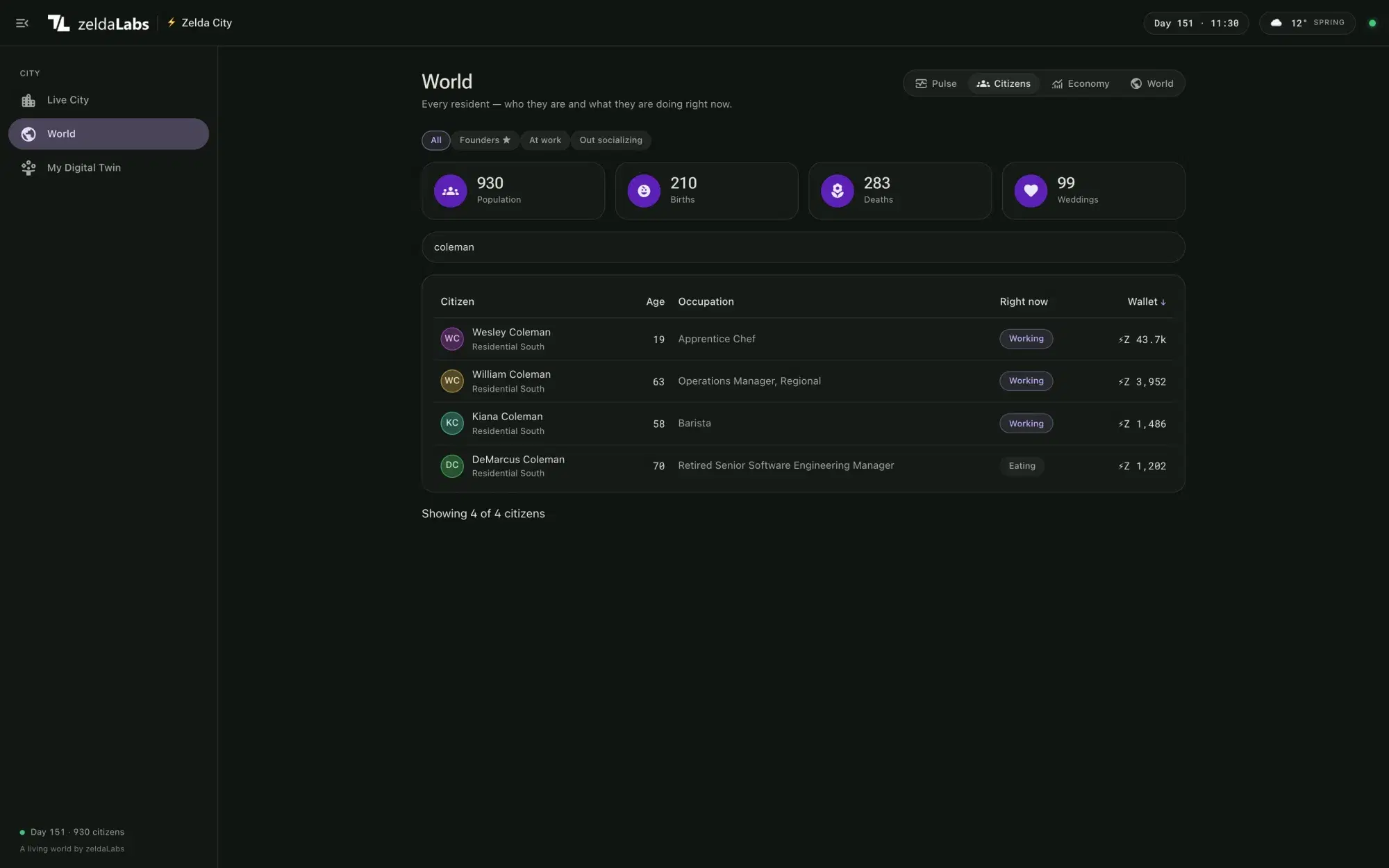
Search “coleman”The whole family, live: Wesley (19) at work as an apprentice chef, and DeMarcus, at lunch, naturally. Every one of the 929 citizens is findable like this.
And it is never too late
Siriporn & Véronique
If Arnav’s story is about compatibility, this one is about courage. Siriporn Chaiwong is a 74-year-old retired nurse from Thailand who keeps small amulets in every pocket. Véronique Moreau is an 81-year-old retired nurse coordinator from France. They met over coffee at Almeida’s Café in Week 20: two careers of caring for others, finally sitting still.
They chatted about life in zeldaCity. About the news. About weekend plans. And on Day 145, both of their diaries record the same quiet thunderbolt:
There’s a real spark with Véronique Moreau.
Word reached the far side of town within a day. Arnav Shah heard it over lunch at The Lucky Thyme. Two strangers at 74 and 81 became the city’s favourite news item. Relationships in zeldaCity, like everywhere, do not check the calendar.
Step inside
The rooms where it happens
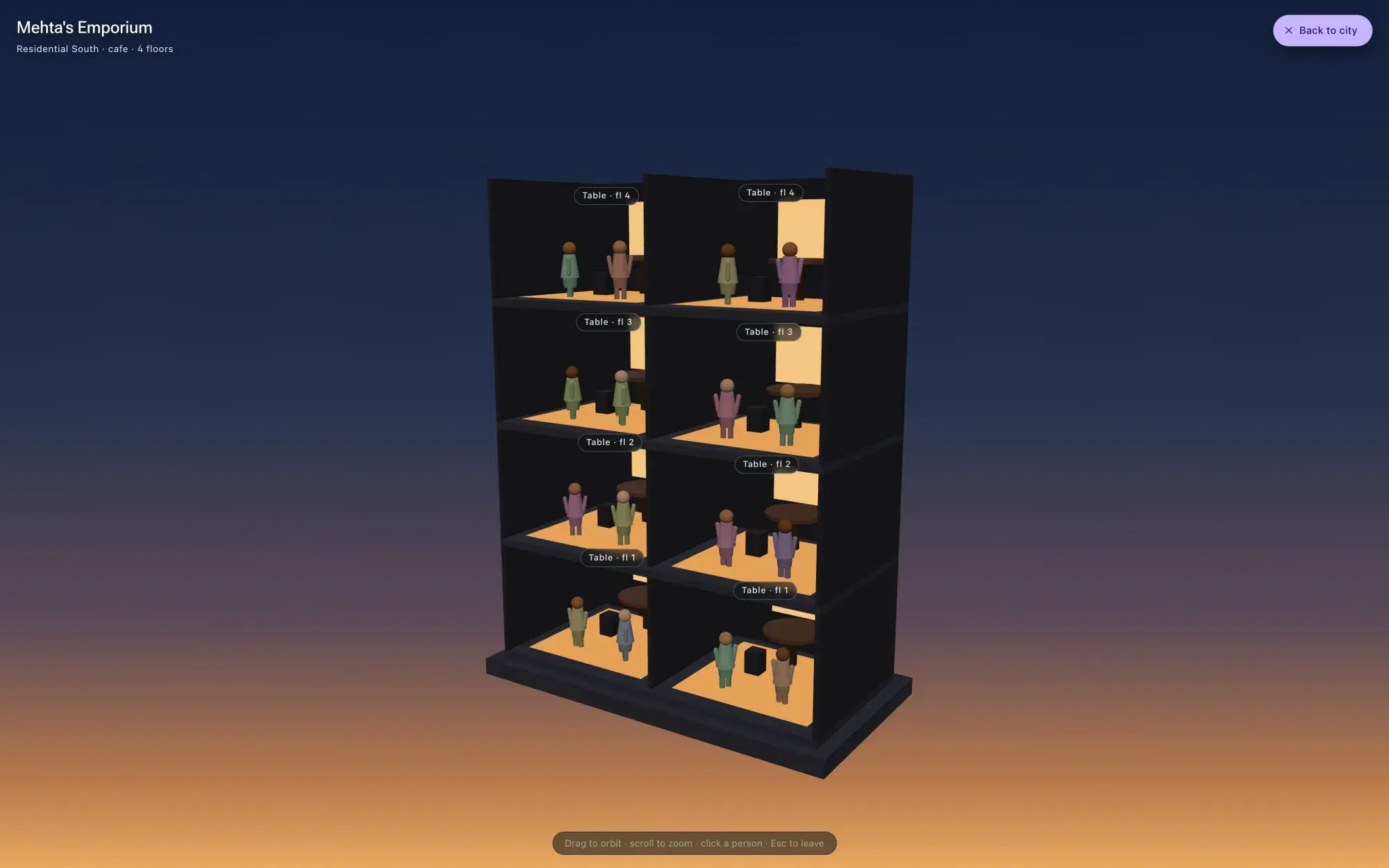
Every building in zeldaCity opens like a dollhouse. Step inside a café at the right hour and you can watch the findings above happening live: pairs at tables, mid-conversation, each one a possible first rung on the ladder. When we froze the city to write this report, 280 citizens were mid-conversation, and the busiest room on the island was a café.
Mehta’s Emporium, 11:30 AMSixteen citizens, six conversations, four floors of the city’s most reliable relationship machine: a café.
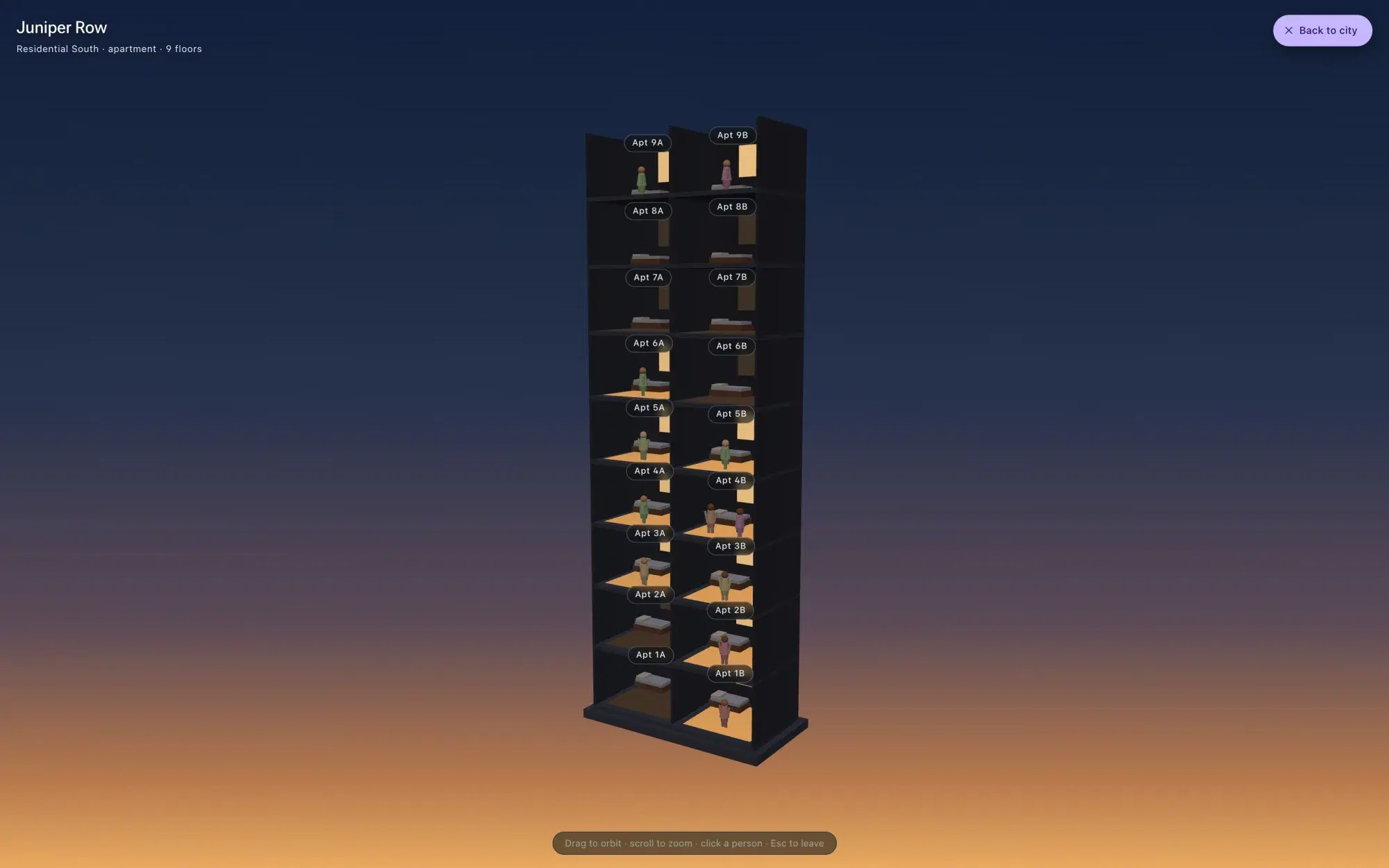
Juniper Row, apartment by apartmentHomes matter just as much: living rooms tied cafés as the city’s most common place to meet someone new.
What do they talk about? Exactly what you would hope. In one frozen morning we found, among others:
zeldacoin pricesscience-fiction novelsthe ferry schedulethe best café in Old Townthe new tower going up downtownweekend plansphilosophy of mind & AI ethicsplans for the future
Between us, city hall gossip is going to change things around Old Town.
The economy
Money with somewhere to go
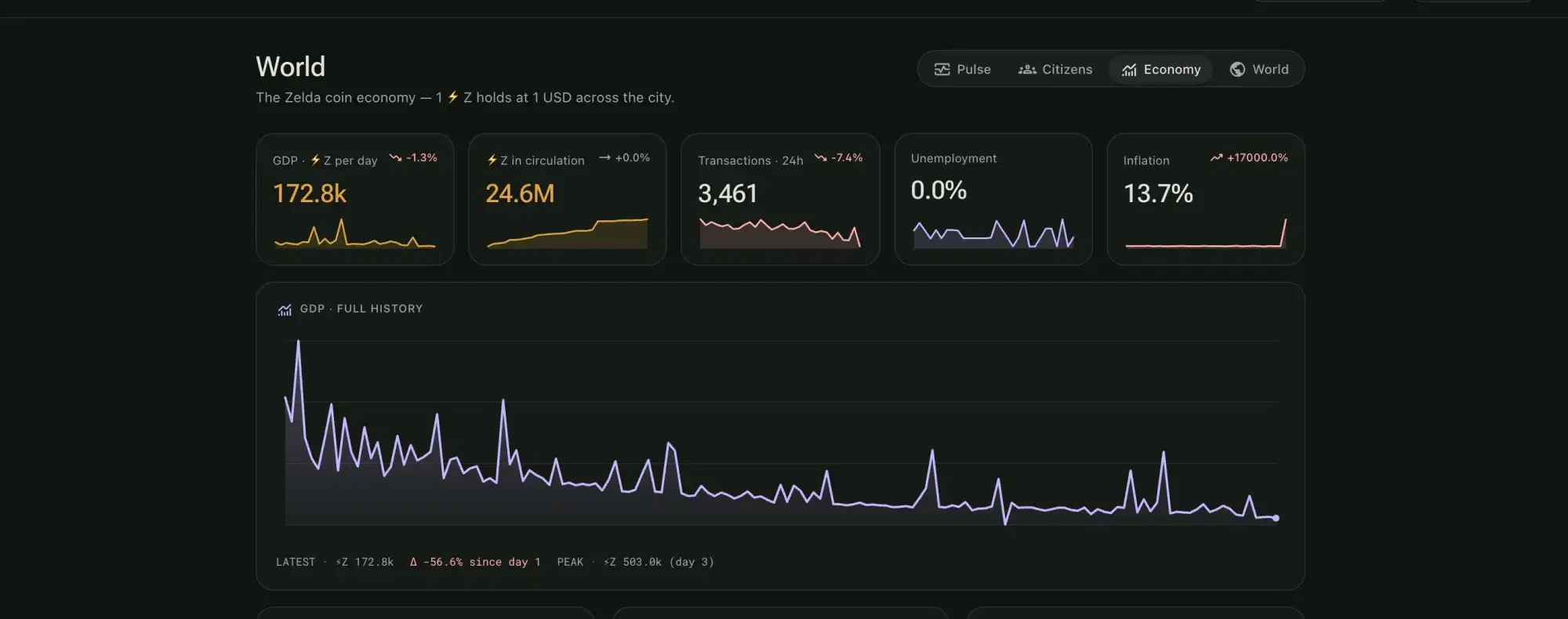
Relationships are the heart of the experiment, but they beat inside a working economy. Citizens earn wages, pay for meals, buy homes and cars, trade five city stocks, and, 103 times in 150 days, pool enough to construct entire buildings: cafés, houses, offices, corner shops, each named after its maker. The city generates about ⚡Z 172,800 of activity a day across roughly 3,500 transactions, with ⚡Z 24.6 million in circulation.
It is an economy with real stakes and real turbulence, absorbed in real ways. On Day 137 a freight company went under overnight, and the diaries caught both the shock and the recovery:
Curious Freight went under. Everyone lost their job overnight. … and, the same day: Hired at The Blazing Spoon, 102 ⚡Z a day!
The economy, Day 151Every number live, every curve the citizens’ own doing. The early spikes are the construction boom of the city’s founding weeks.
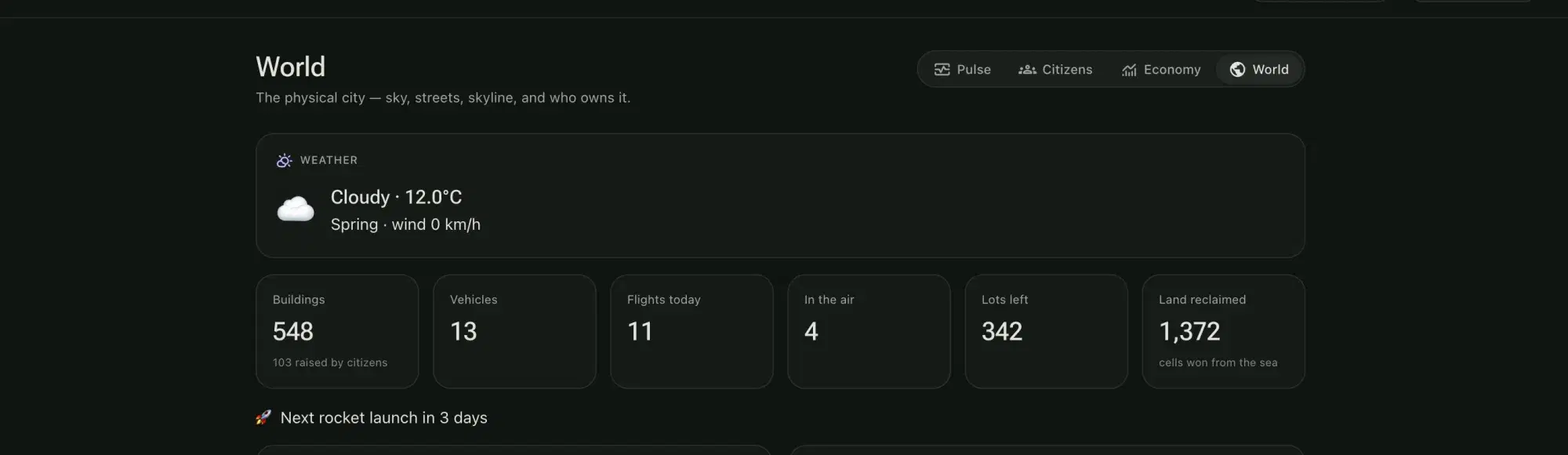
The physical ledger548 buildings standing, 342 lots still open, 1,372 cells of new land won back from the sea, and a rocket on the pad, three days from launch.
The long arc
Births, weddings, and goodbyes
A hundred and fifty days is long enough for the city to show its full circle. 210 new citizens arrived, many of them children of residents, turning eighteen and moving into town to parents’ delight (“the house is loud again”). 99 weddings were celebrated, every one of them the top item in that day’s gossip. And the city said 283 goodbyes, each one gathering a family at the harbour’s edge.
This is, we think, the quiet achievement of the experiment: not that simulated people can chat, but that a society of them, left alone with jobs, cafés, weather, and each other, produces the whole human shape of a town: routine and romance, markets and memory, arrivals and farewells, all of it unscripted and all of it recorded.
Golden hourSomewhere behind those windows, 280 conversations are happening. About coin prices, about the ferry, about each other.
Why we built this
A laboratory for human questions
zeldaCity is zeldaLabs’ answer to a stubborn problem: the questions that matter most about people (how communities knit together, how ideas and news spread, how places shape belonging, how a market absorbs a shock) are exactly the ones you cannot A/B test on real people. Now there is a place where you can watch them play out, at full richness, with personas whose psychometric depth makes their choices meaningful rather than random.
The findings in this report are the first of many. They emerged from nothing more than proximity, personality, and time, and they landed remarkably close to what decades of social science say about real humans: relationships are built by repetition, anchored in third places, matched on temperament, and carried by gossip and memory. When a simulated society reproduces the textbook while writing its own love stories, you have an instrument worth pointing at harder questions.
You can orbit the island, open any citizen’s card, step inside any café, watch the economy tick, and ask Ask Zelda, the city’s built-in guide, what is happening and why. The city will answer with what it knows, which by now is a great deal.
Arnav walked past The Salty Gallery this morning while DeMarcus lingered over lunch. Siriporn and Véronique’s move-in is still making the rounds. And somewhere in a café, two strangers just met for the second time: one rung up, a hundred to go.
Method
Where every number came from
All figures were measured directly from the live simulation at its Day-150/151 checkpoint: population and life-event counts from the city’s own registries, relationship statistics computed across all 929 living citizens and their 52,677 recorded ties, meeting-place counts traced from citizens’ first-meeting memories, and personality comparisons computed from each citizen’s psychometric profile (couples versus 20,000 random pairings). Quotes are citizens’ verbatim recorded memories. Screenshots are unedited captures of the live product, and the day-in-the-life clip is the live city recorded at accelerated simulation speed.
One boundary worth stating plainly: this is one city of 929, observed once. The patterns above held for 150 days in this population; they are not a law, and we have not yet re-run the city from a different seed to see which of them survive. zeldaCity and its citizens are a simulation, and any resemblance of generated names to real persons is coincidental.
If there is a question about people you would rather watch play out than guess at, we should have a conversation. Thirty minutes, no commitment.